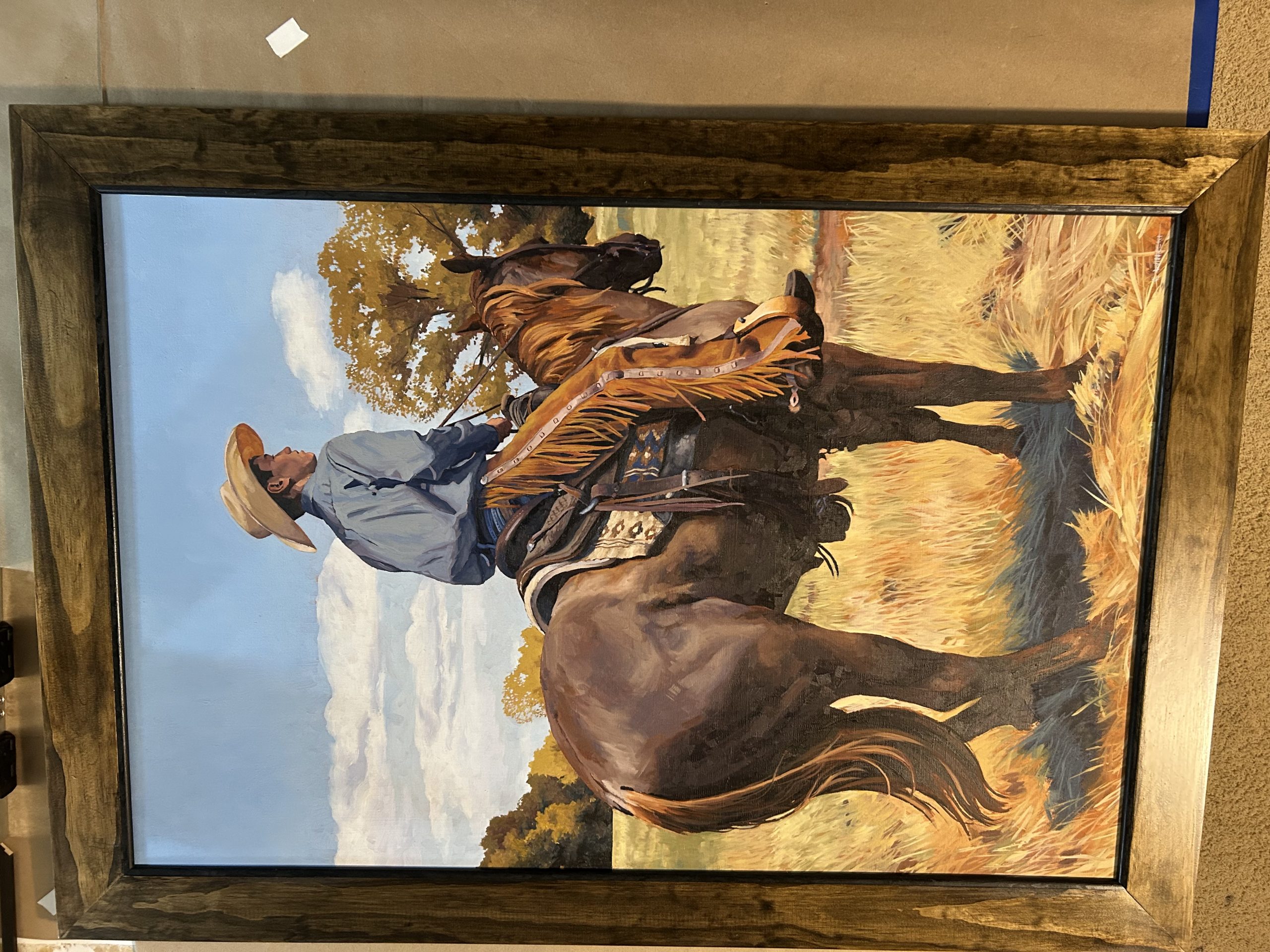
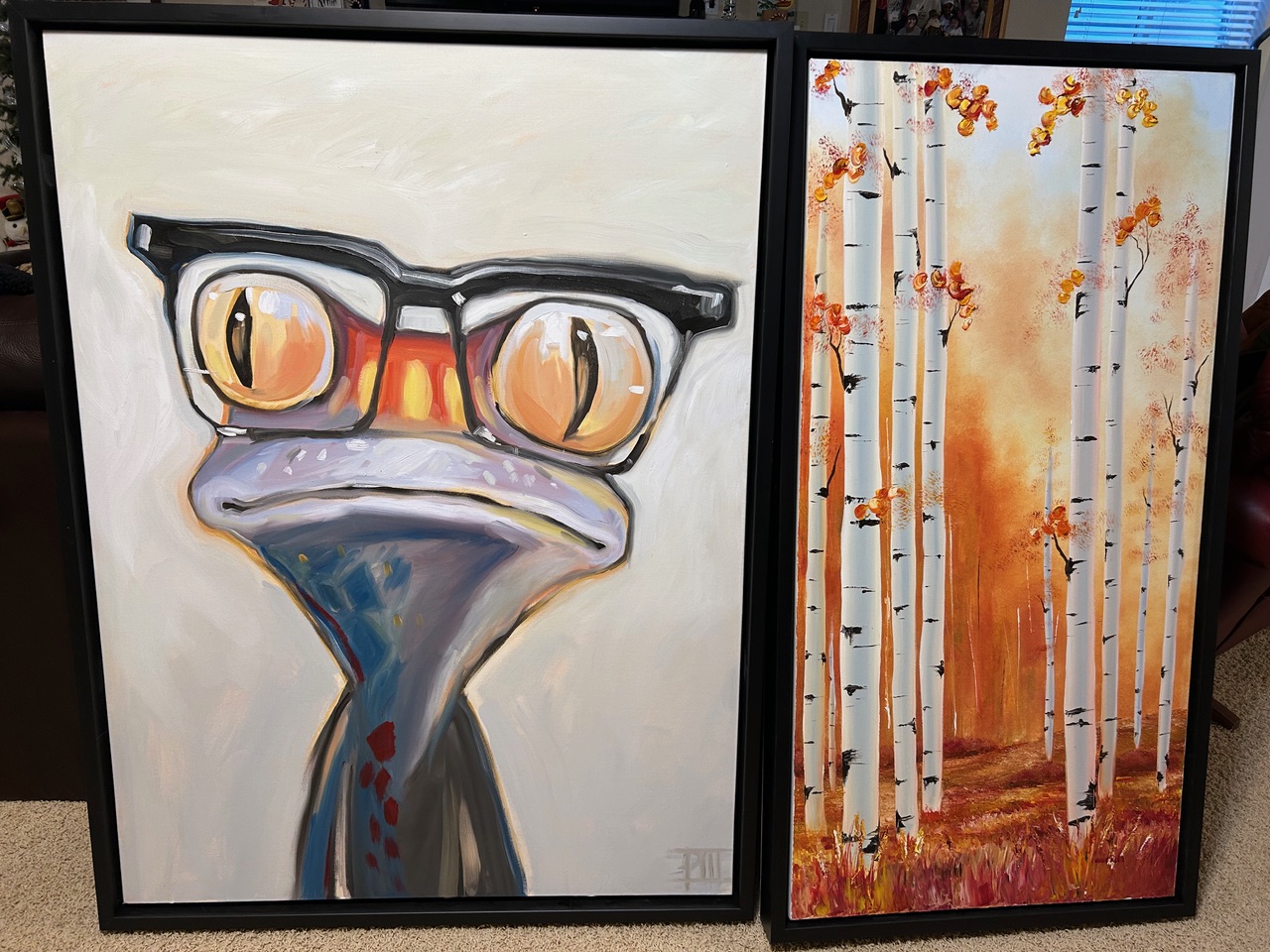
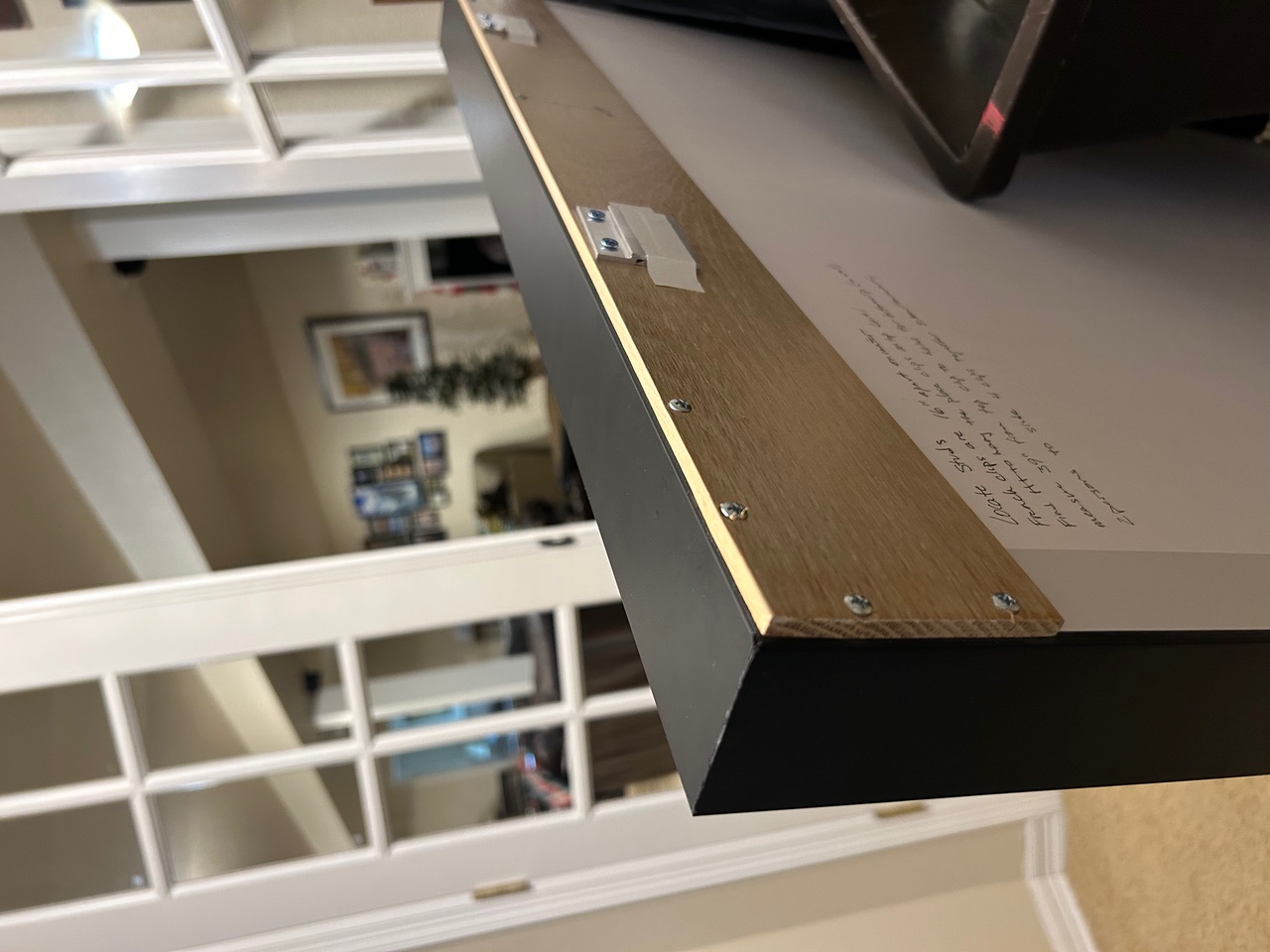
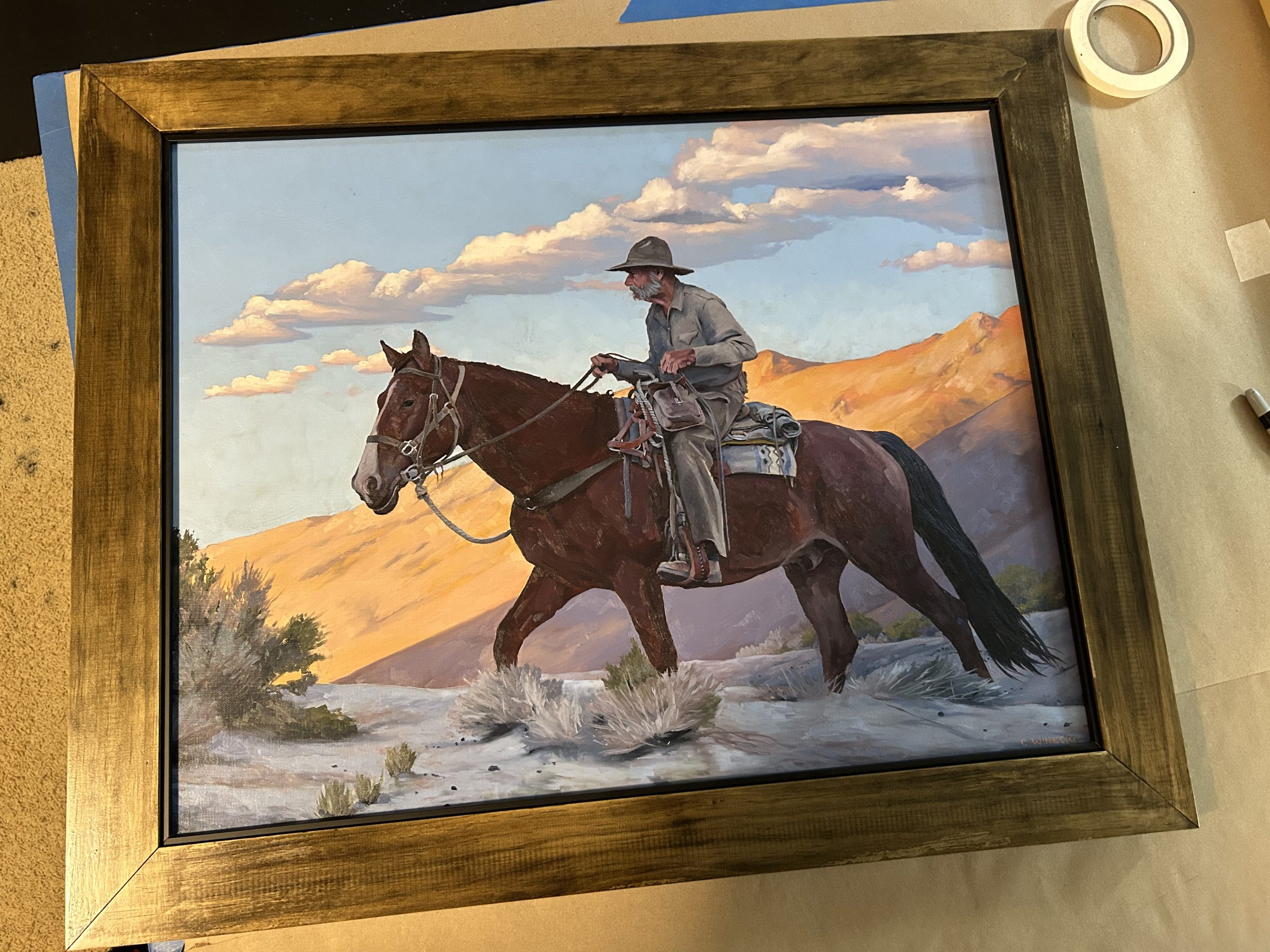
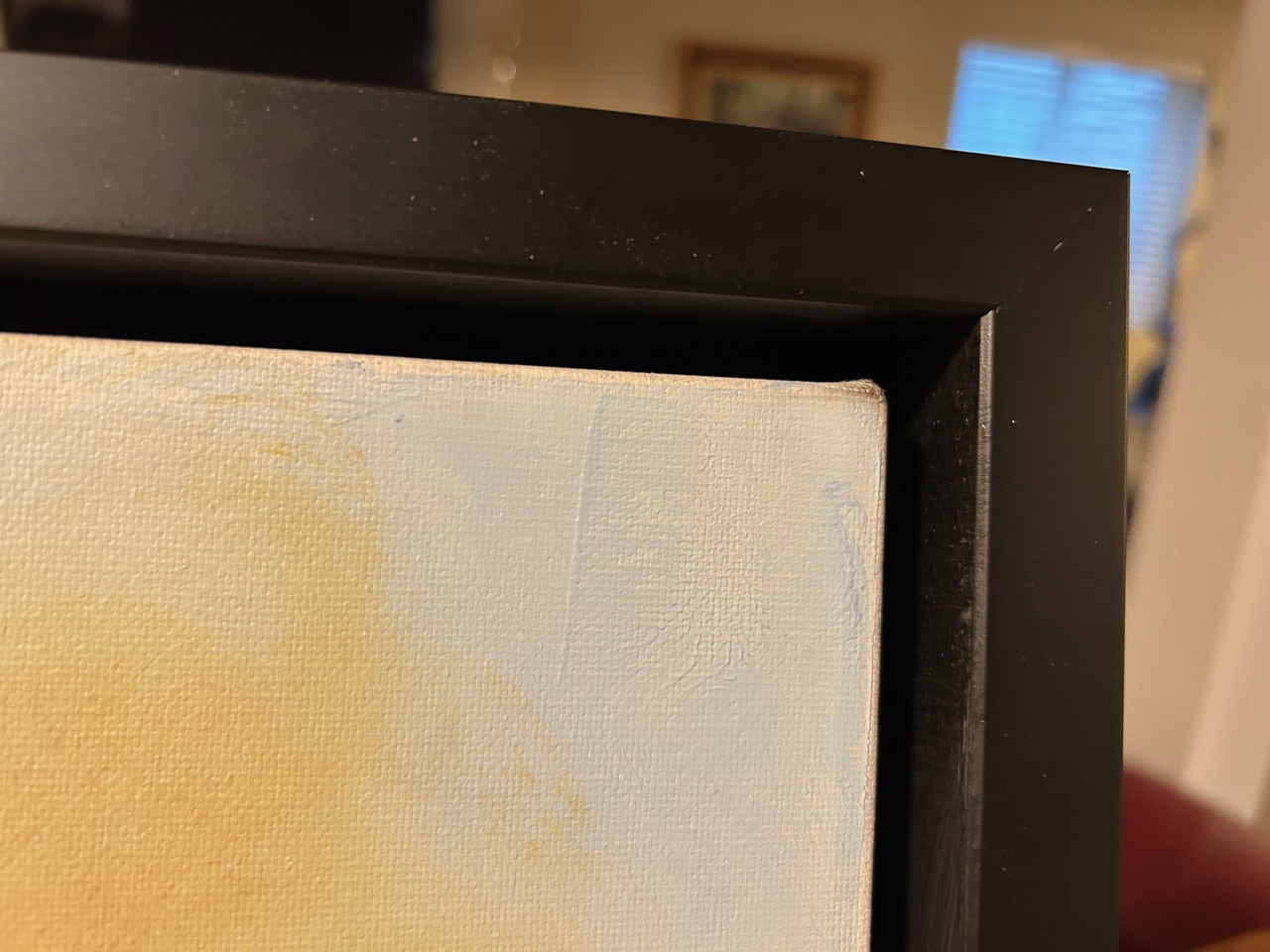
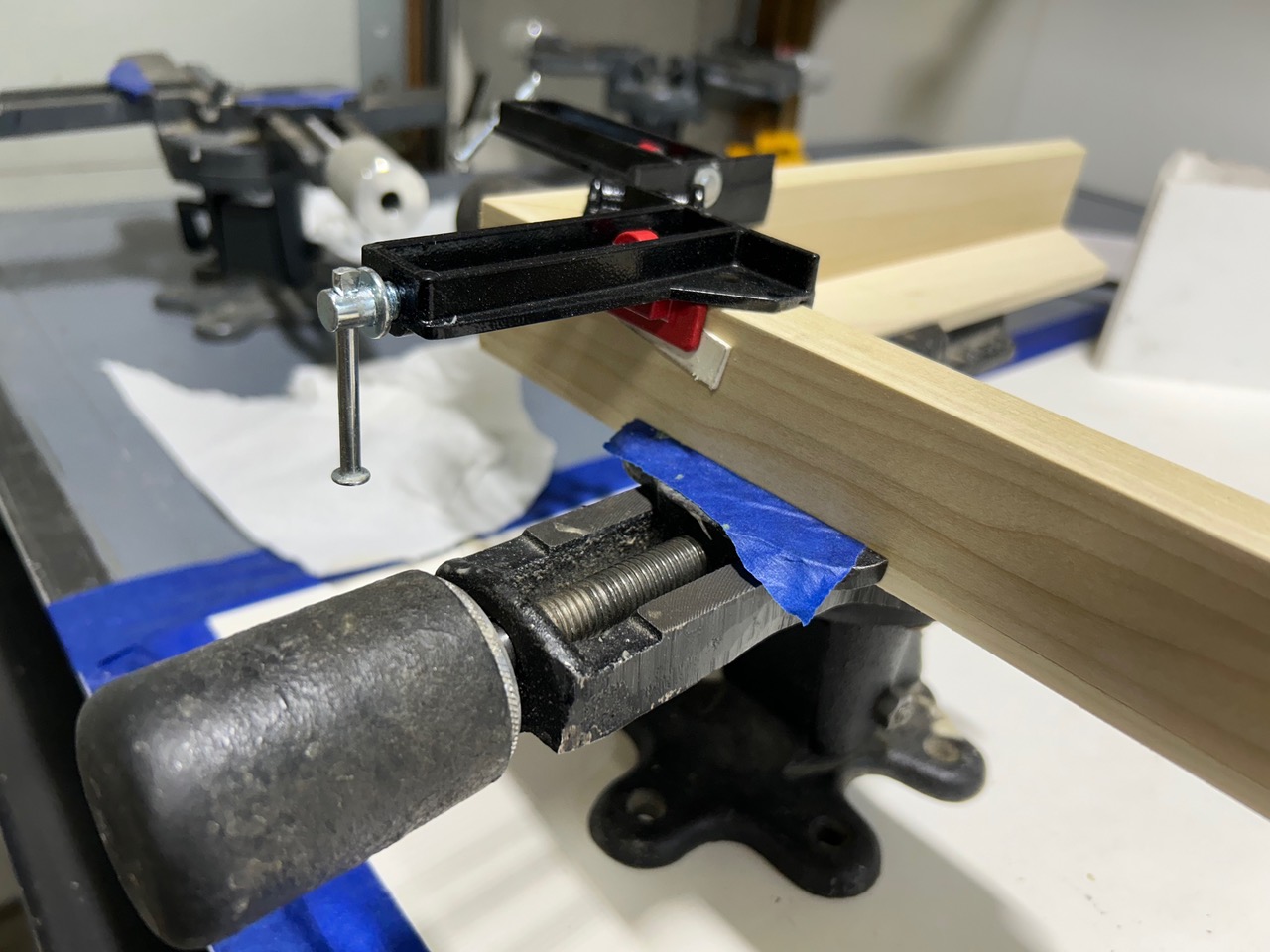
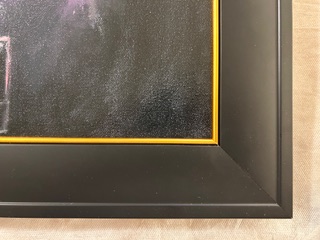
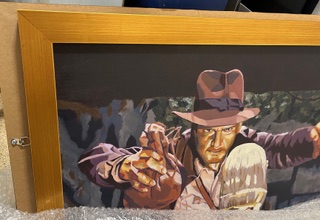
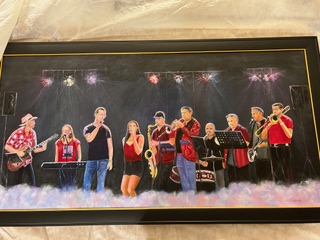
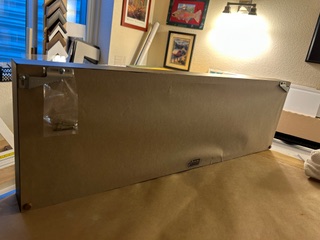
These large pieces are examples of a floating frame. The Canvas is usually thicker than a smaller painting. So a frame is used to “float” under the canvas and protect it with more structure and, in this case, coming out in front of the canvas to prevent something getting inadvertently pushed up against the painting itself such as furniture. A Floating frame is also stylish in the is show a portion of the sidwall of the canvas that is often painted by the artist.
By comparison a Gallery Wrap is a canvas that is hung without a frame. The sides are painted and the width usually exceeds 1 and 7/8’s. Different Galleries have different criteria for frame hangings, but you don’t have to!
Shadow Box
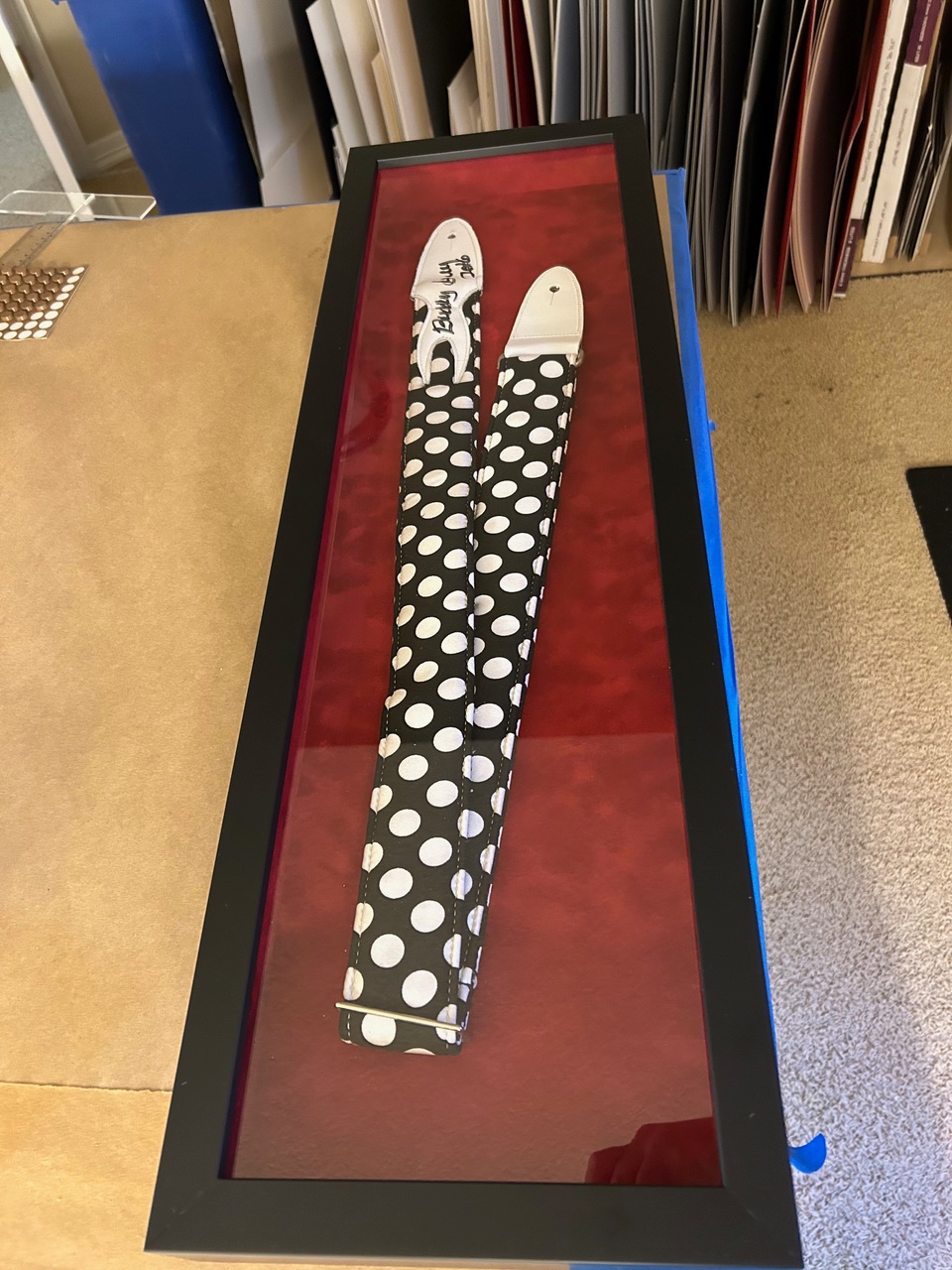
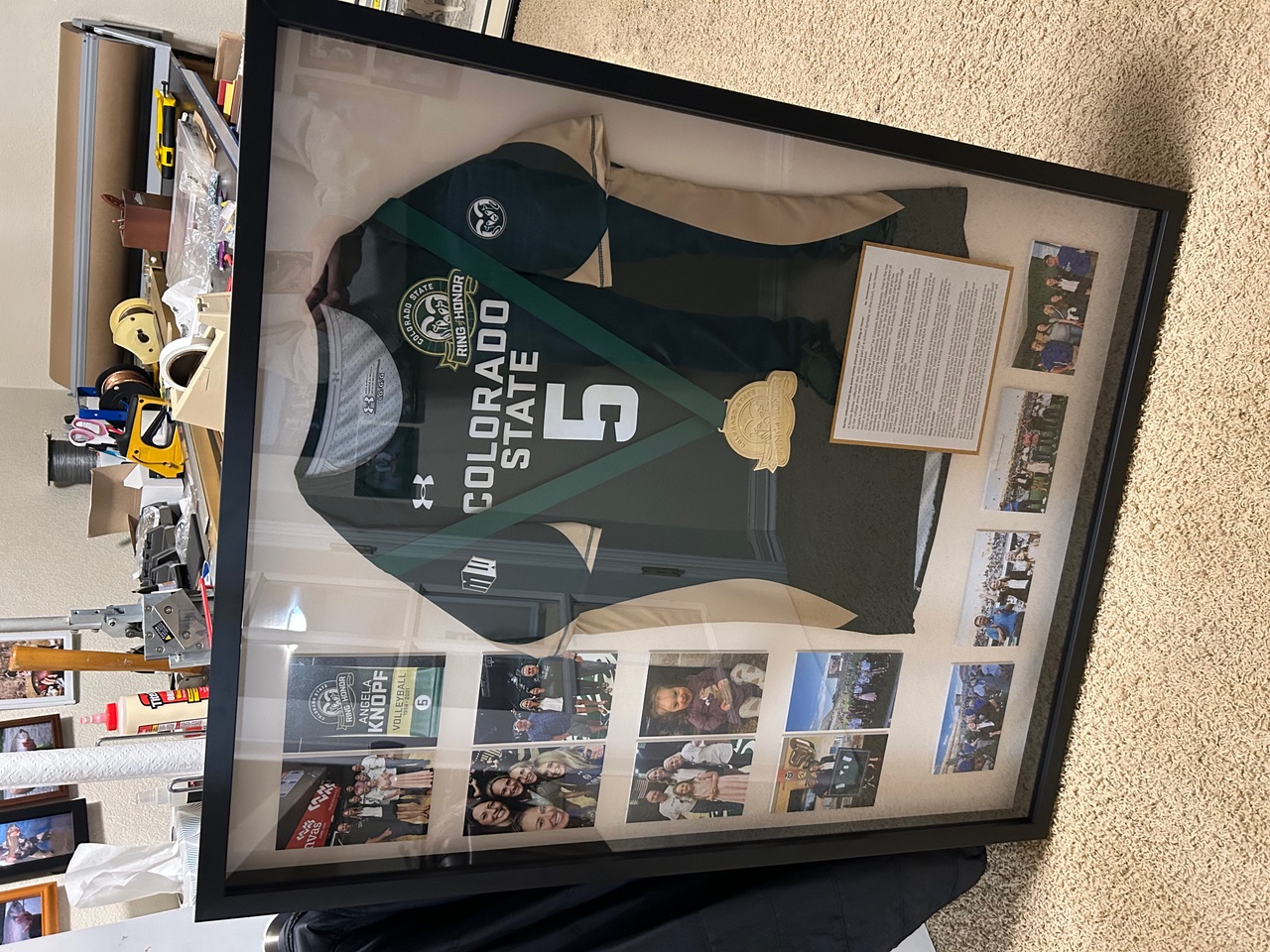
These are two very different examples of the use of a shadow box frame. This frame containing the jersey is 32 by 40 inches and meant to hang in a gym. The backing is reinforced with special hangers. Each box is 1.5 to 2 inches thick and the object is traditionally sewn to the backing mat to preserve it without tape. To prevent the heavy medallion from breaking the glass in transport, and “invisible” thread made of stretchable clear material is place over the medal. The guitar strap lays on a velvet mat that also is inlaid along the sides of the shadow box making a nice contrast with the piece.
Watercolors
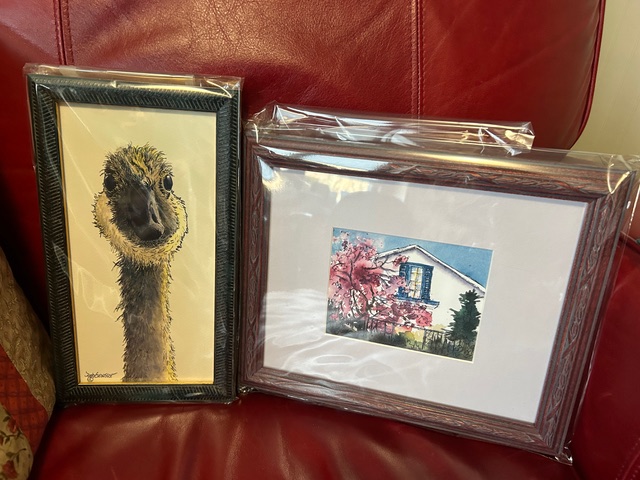
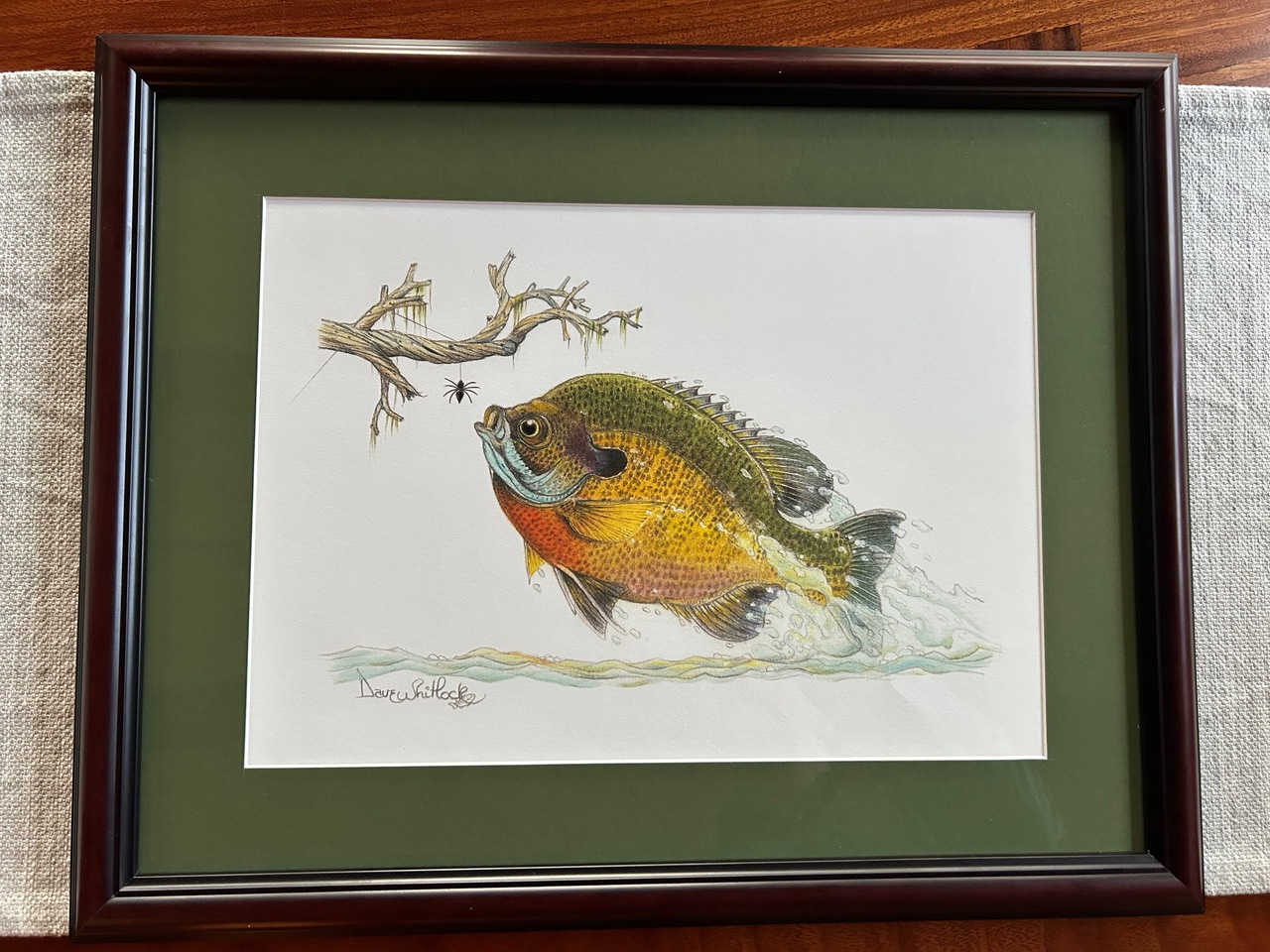
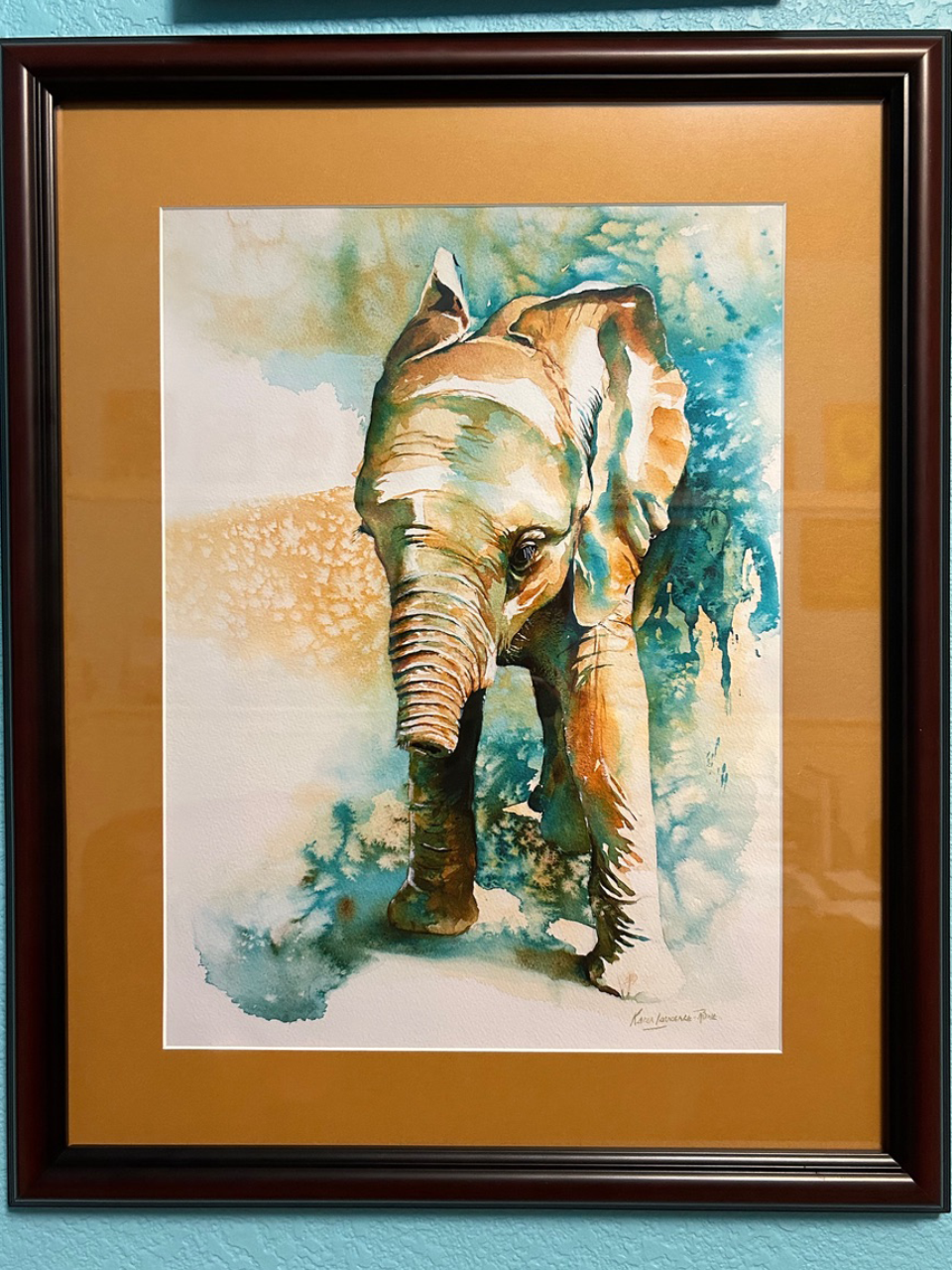
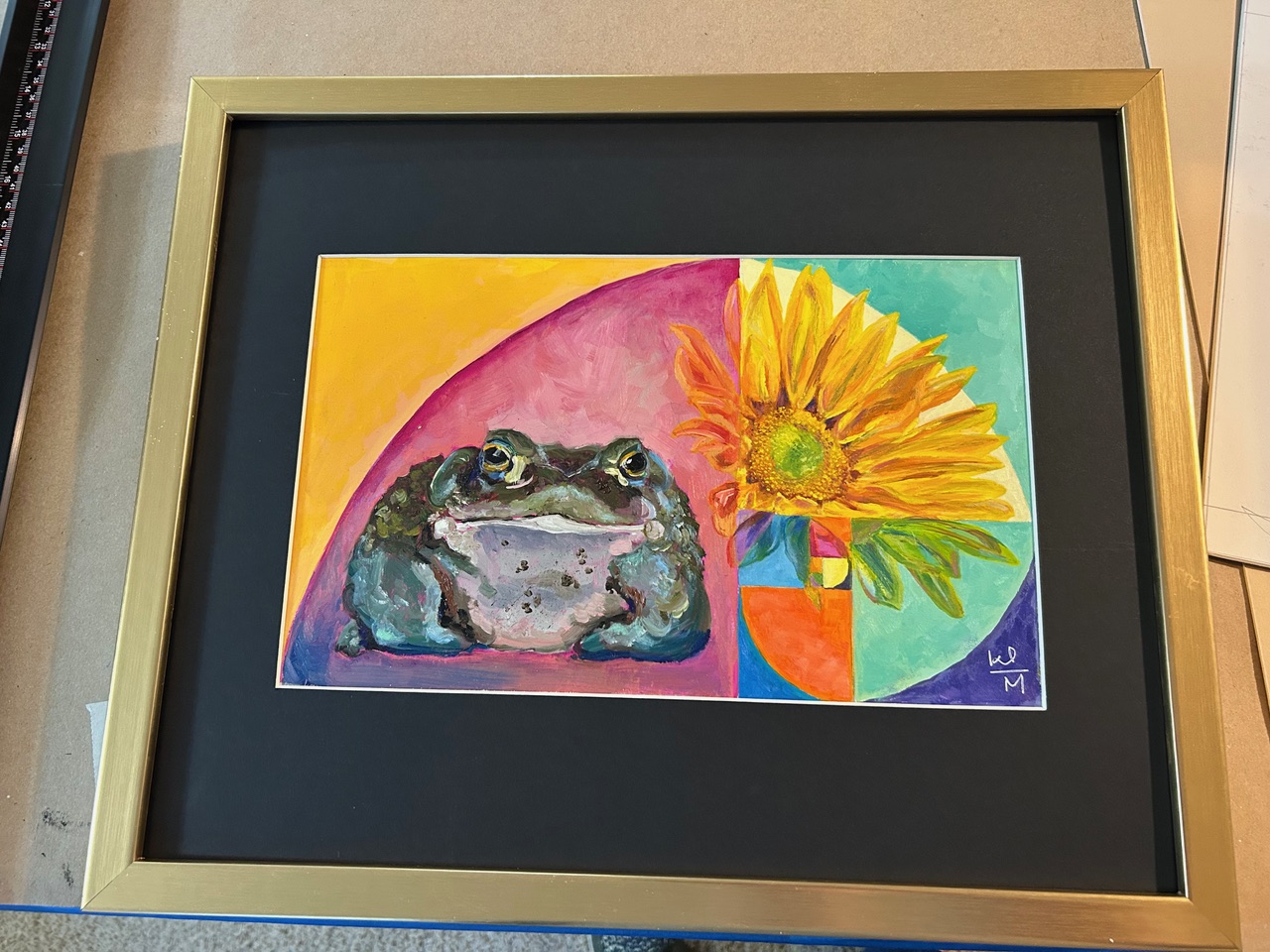
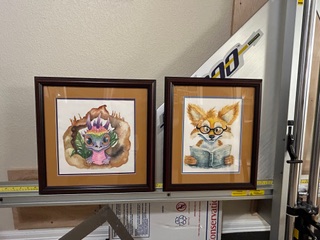
Watercolors sometimes are challenging to frame due to the watercolor paper that often buckles while drying. Some artists prefer to flatten the piece before framing. We do that with our heated press that measure 52 x60 inches. Some artists want to display the texture of the piece, so we will “float” the piece on a mat board using linen tape. Most artists like to mat their watercolor to help flatten the piece and not touch the glass. A host of mats are available. In these examples the pieces are double matted or have two layers of contrasting colors. In rare cases, strict rules are in place for gallery displays of competition watercolors that call for only white matting. But what are strict rules in art for, to be broken if you prefer! Always a paper backing on the frame seals out dust, pests and possibly moisture to preserve the art further. Don’t forget some glass will also filter UV rays. We have all seen the effects of light exposure damage to art in our dentist’s offices!
Prints
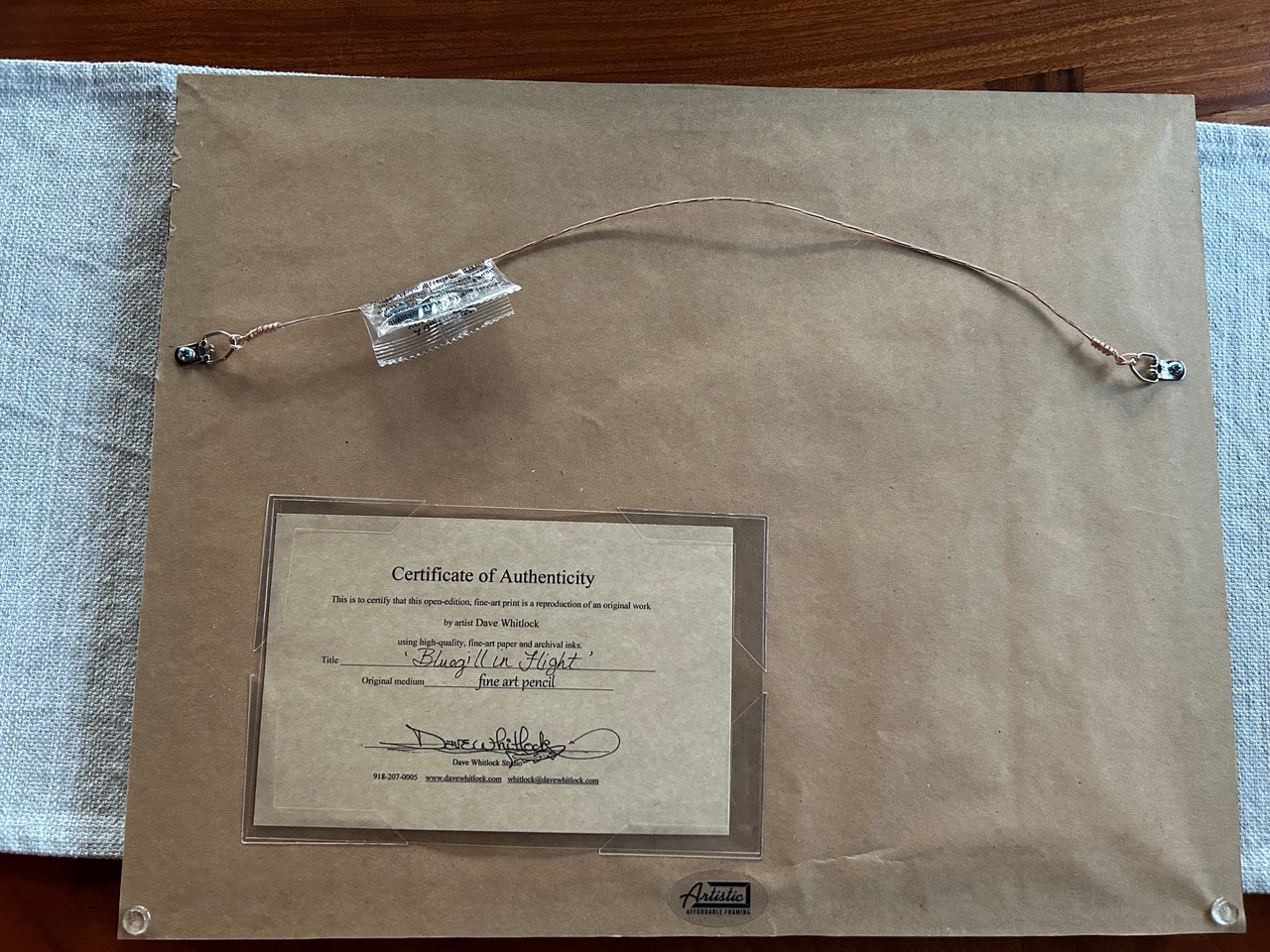
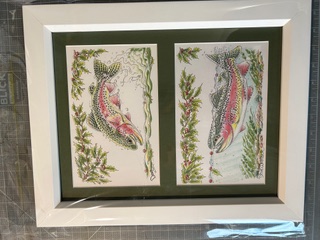
These prints by the famed fly fisherman Dave Whitlock are so fun! A print usually requires a mat and glass to preserve it and display it to full effect. Prints are often purchased for a fraction of the original, so are perhaps not as valuable and therefore do not justify an overly expensive frame. In this case, the pieces are meant to come out for very interesting Christmas decoration, so the mats were chosen to reflect the season and the colors in the piece. Your framing person can help you brainstorm ideas that are fun and economical. And a white frame is always a carefully measured choice, especially if children live in the house!
Canvas
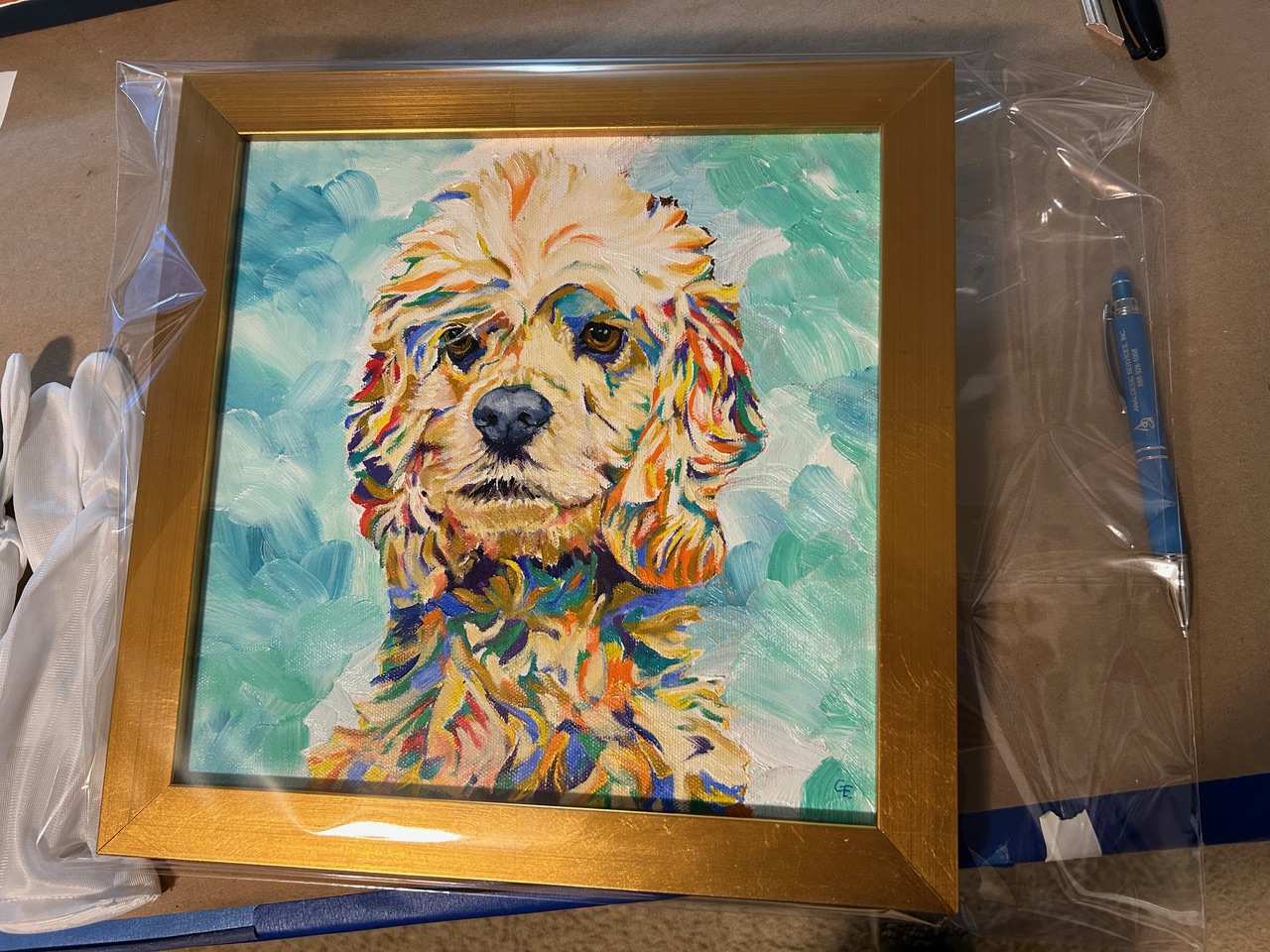
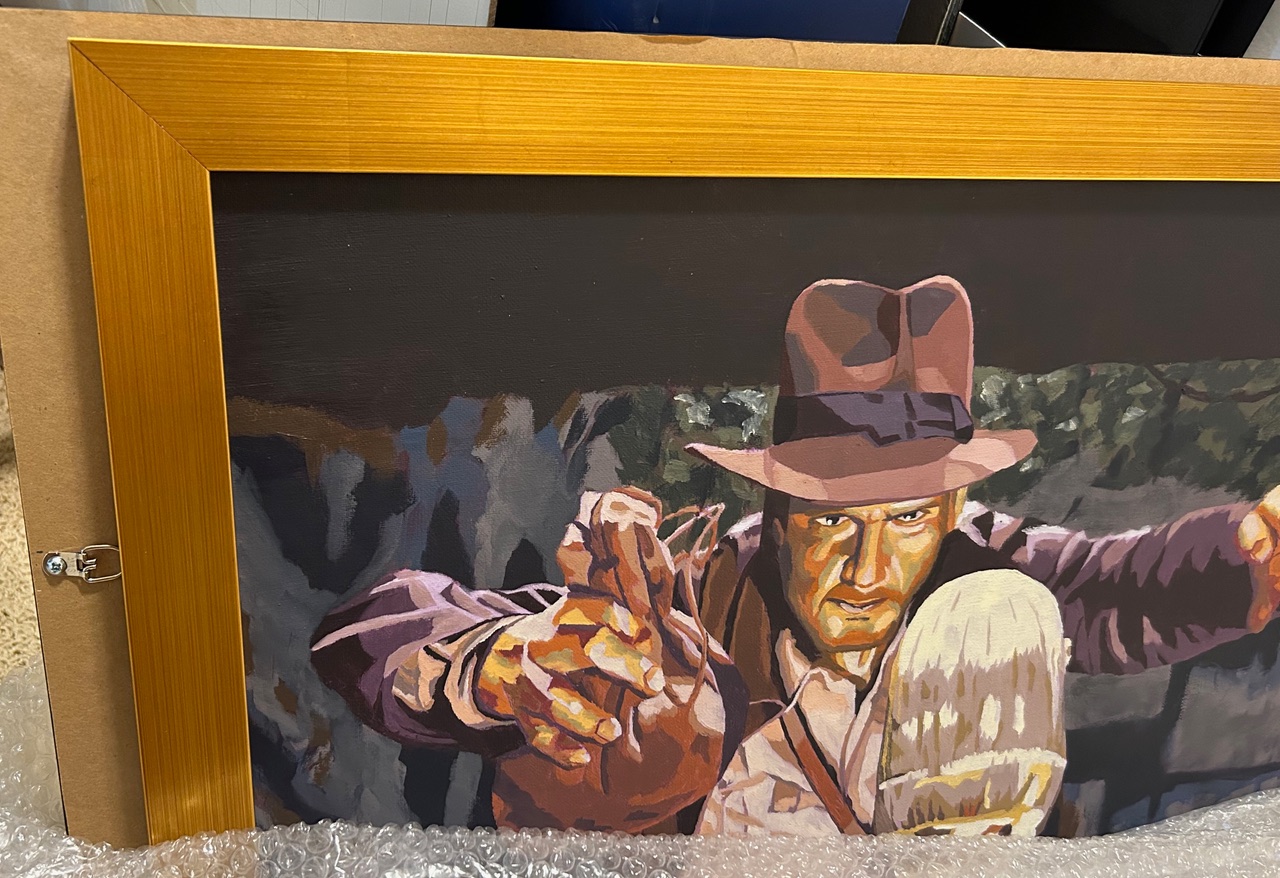
Canvas painted original oil and acrylic paintings are built to stand the test of time when exposed to the atmosphere. Some are further protected by a varnish. They are meant to be enjoyed with no barrier to the colors, brush strokes and even the texture of the painting that can be seen and maybe felt. Prints on canvas are meant to look like originals as well. That is why they do not need glass. The sky is the limit on framing options. In these examples, the band painting was very large and a gift. The artist (Ken Sathra) wanted to be economical with the frame. A value line black one-step was chosen at 2 and 3/8 inches and paired with a slender accent frame called a fillet which sits inside the black frame. The combo gave the look the artist wanted without an expensive frame. A frame this big usually also gets a special hanger that hangs the picture from two corners for weight support and resistance to tilting. The second piece was a fun piece of fan art by Mark Olenick. The pop he got was to mimic the center of the piece, the iconic gold idol, with the gold frame. Inexpensive so as not to cut into its purchase price, but not your typical Hobby Lobby frame. Nice choices gentlemen!
Repairs
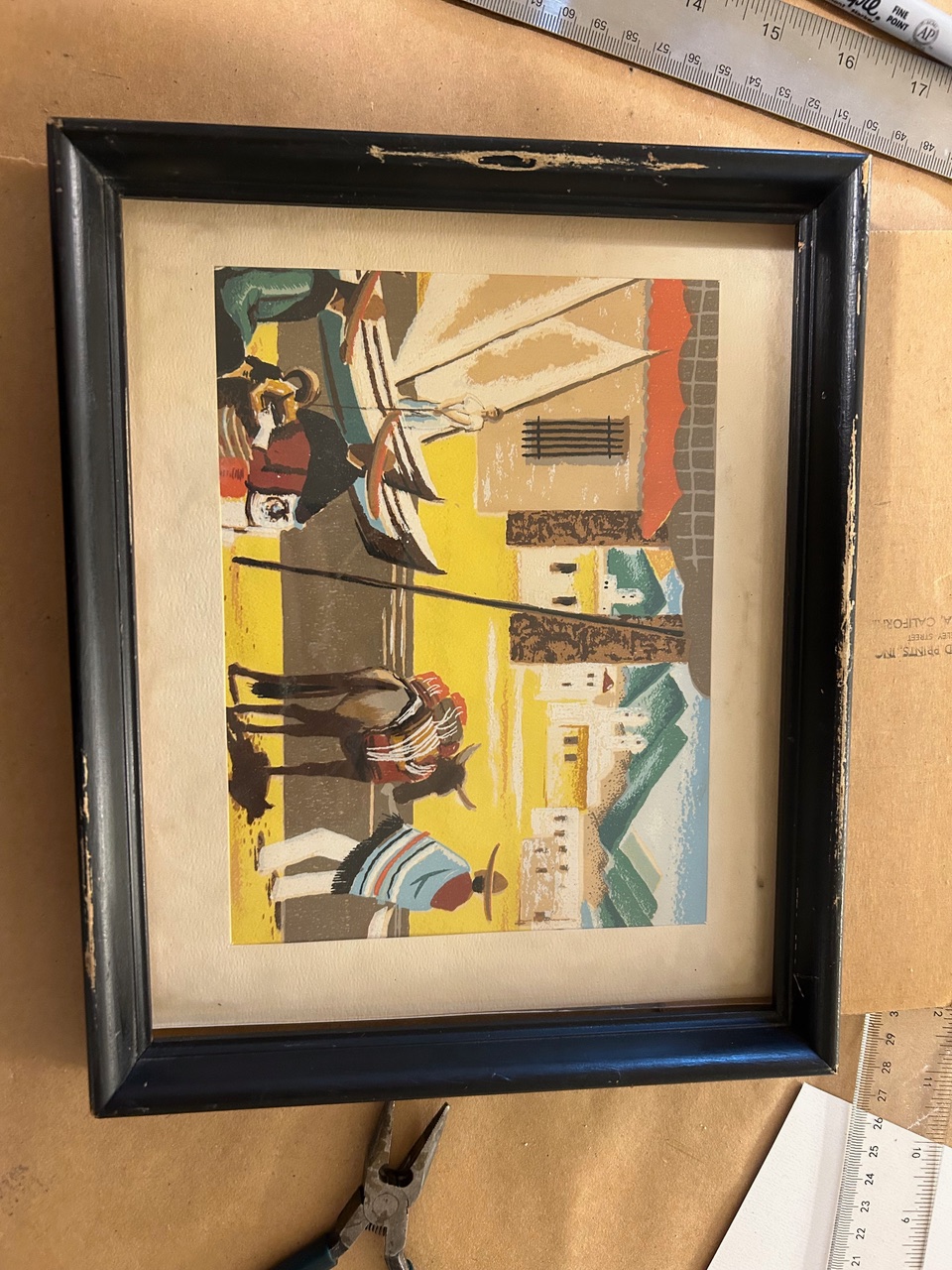
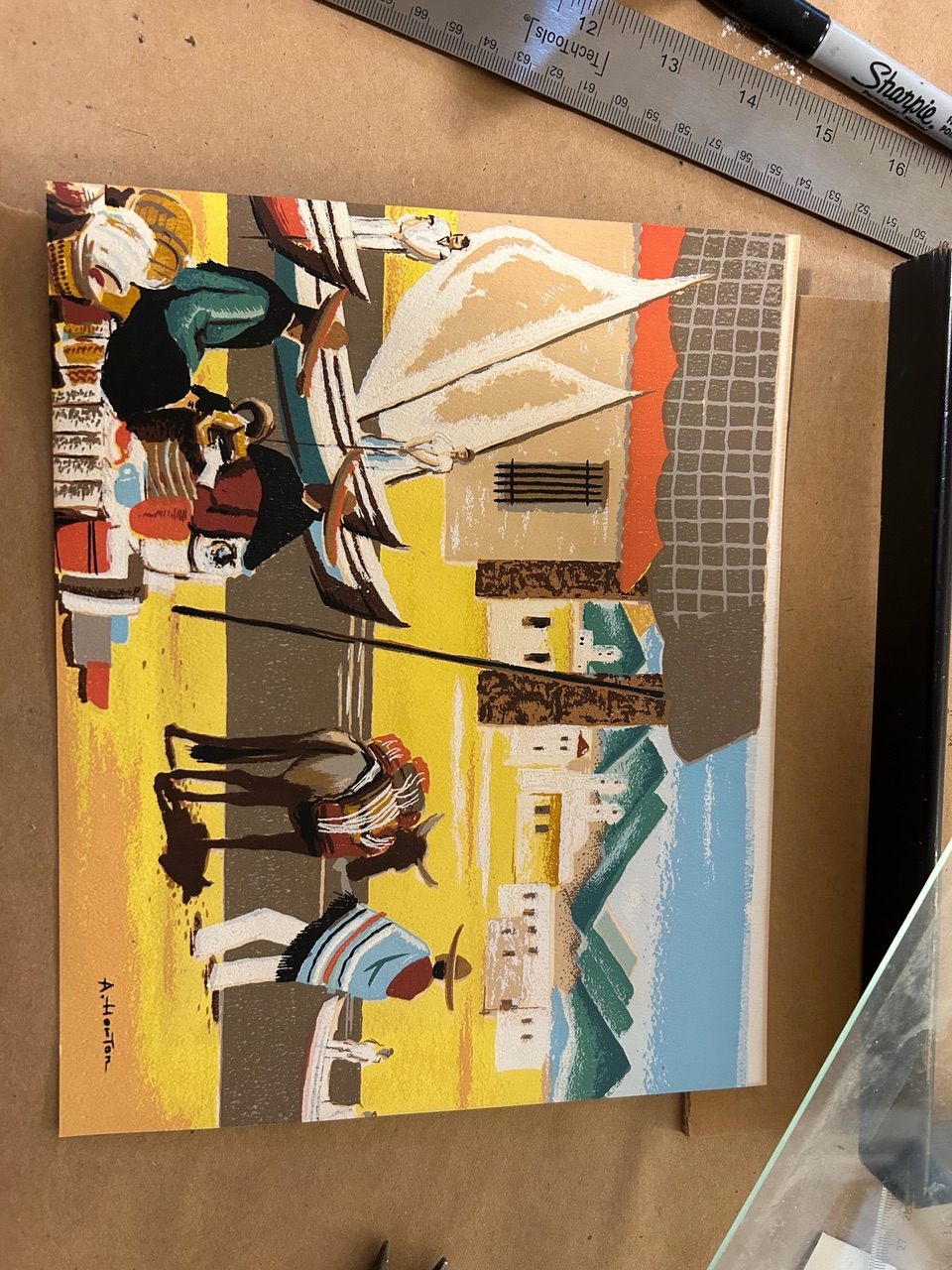
Sometimes good art needs a helping hand. Or bad art (no such thing unless your relatives chose it) needs a facelift. Simply cleaning glass and a new mat can breathe life into a painting or print. In the examples, old neglected art found new life. In one case the mat hid too much of the artwork, a smaller mat and a larger frame transformed the piece. In the second case the print was nearly ruined by our nemesis masking tape and cardboard mats. This photo was gorgeous when redone! Thrifting rules! Of course the best examples are never properly photographed. I’m just a framer!
Finish and Labor
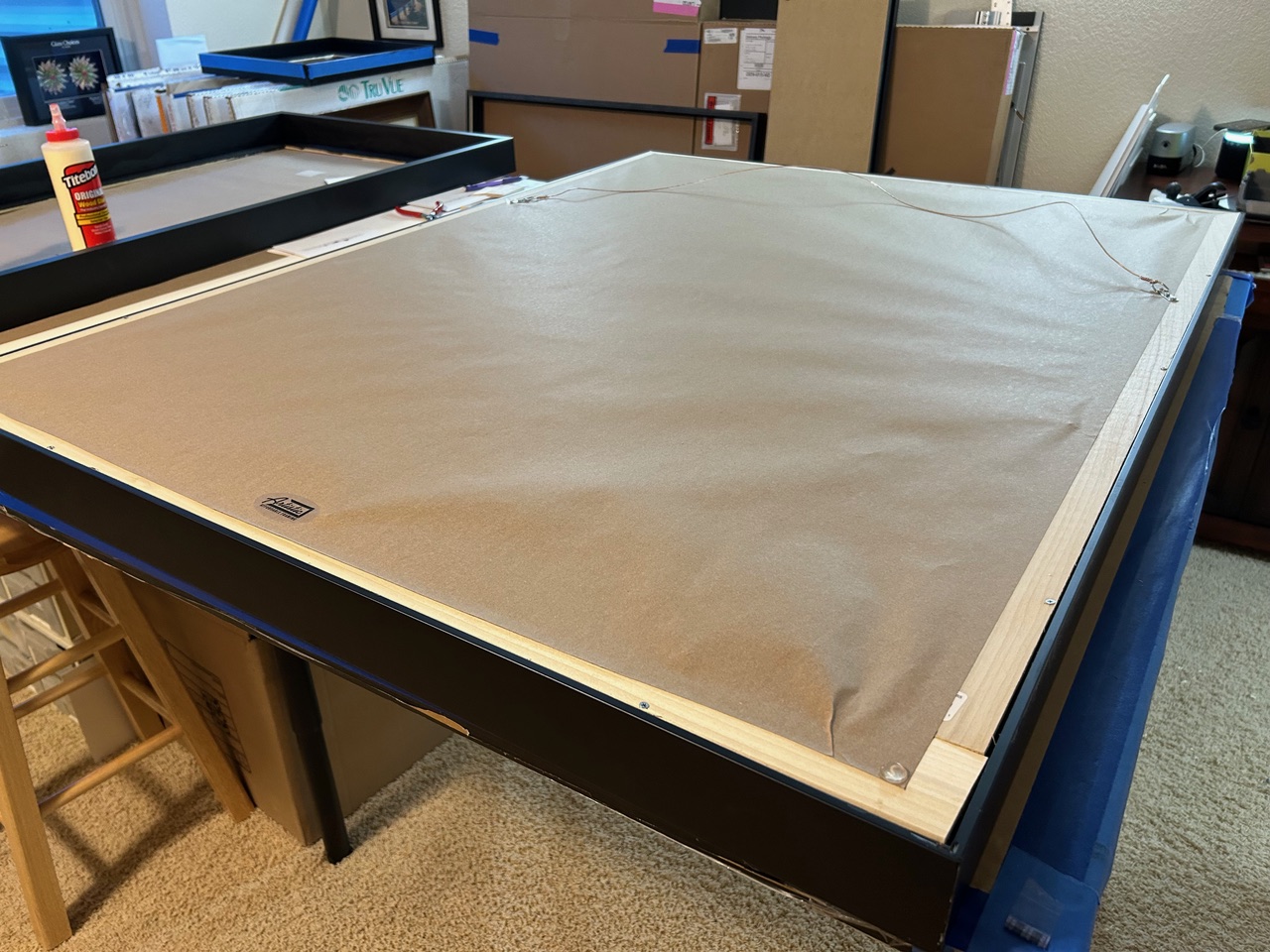
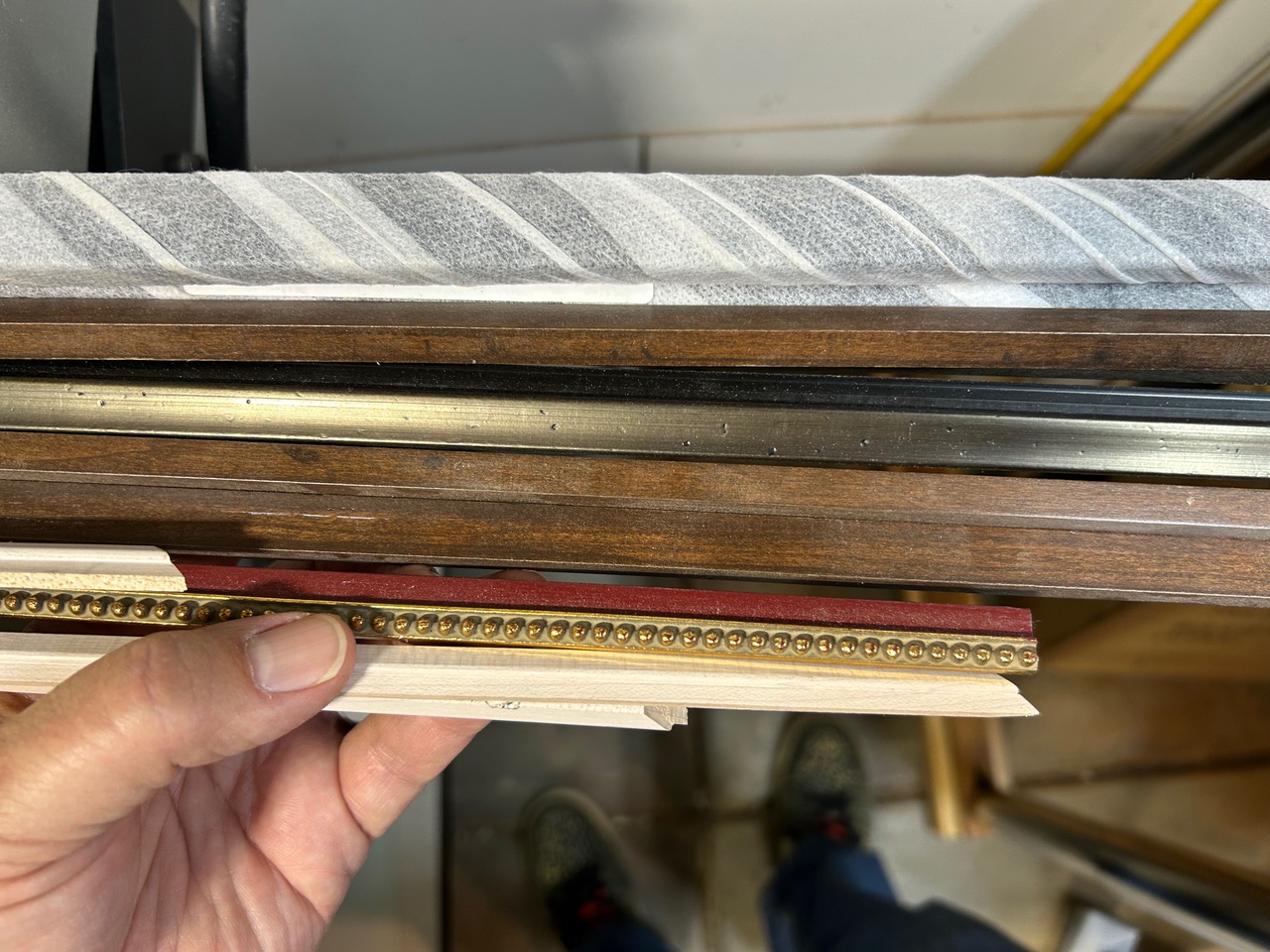
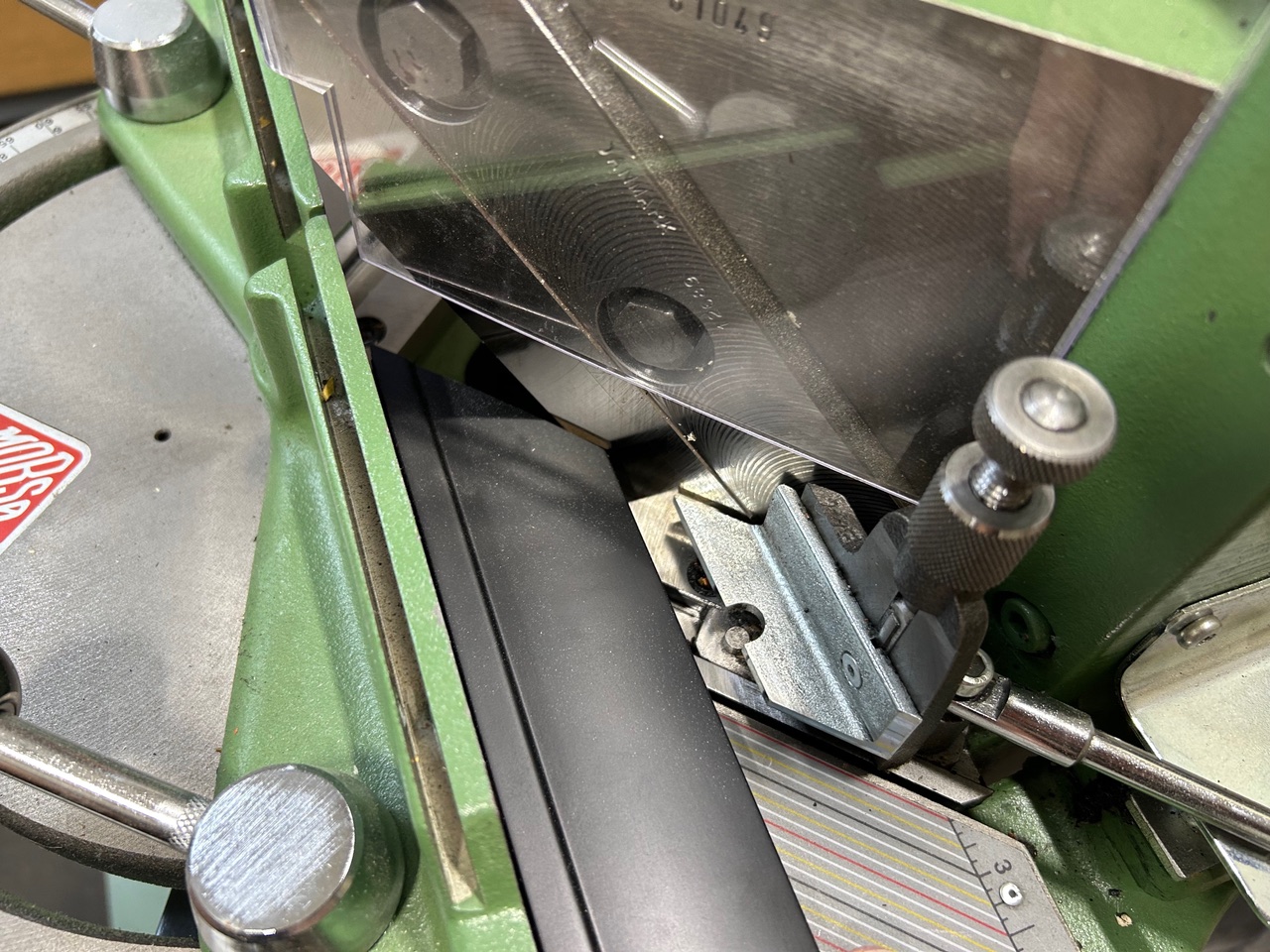
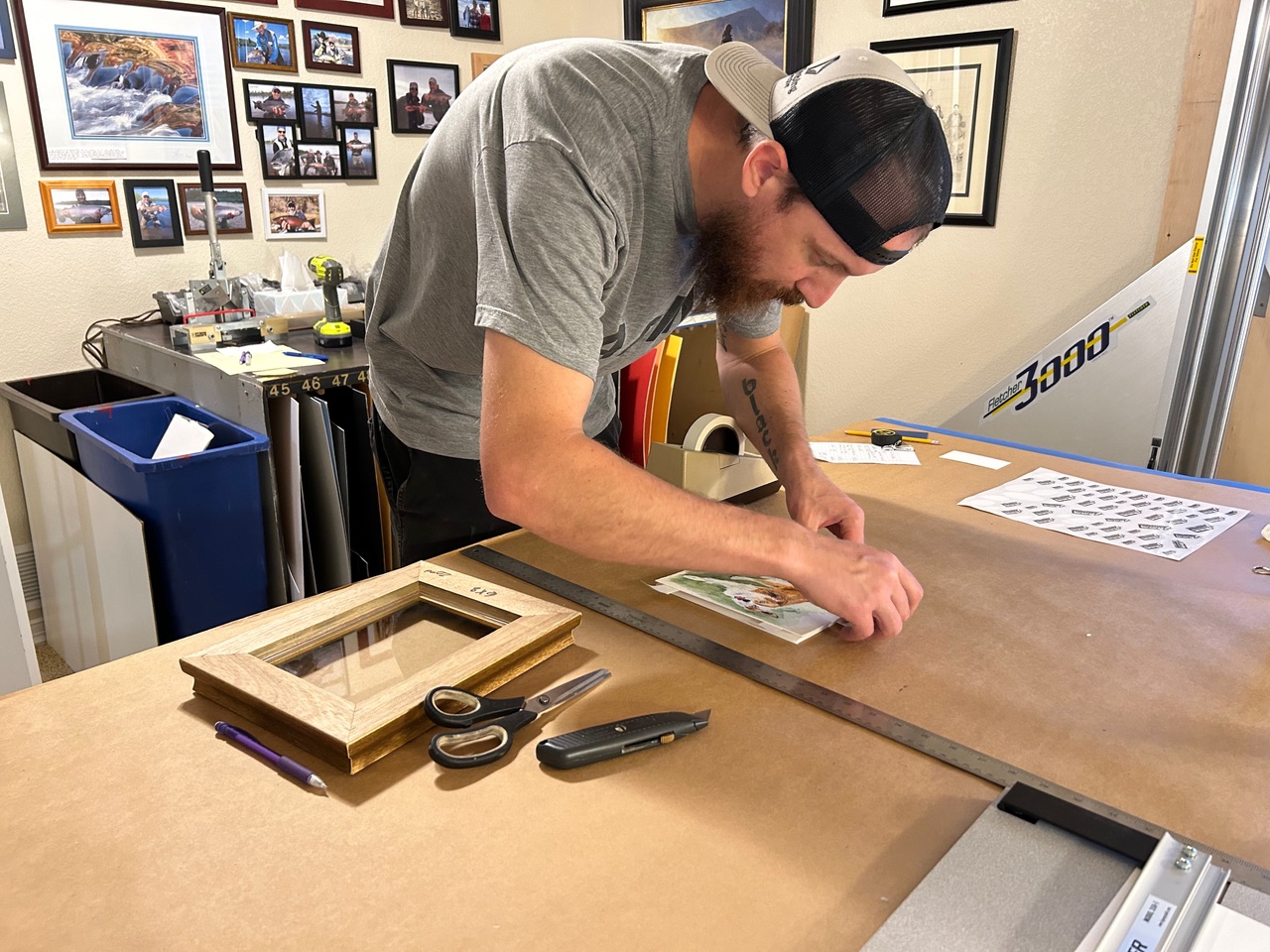
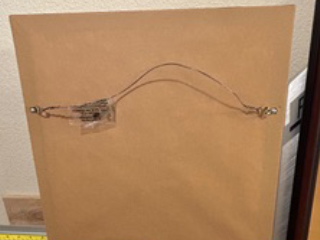
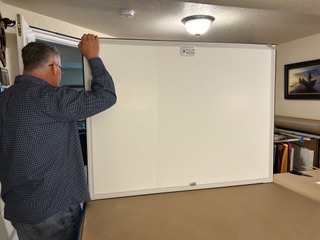
Not too many folks look at the back of a frame. But you get what you pay for, and I want to show you what it is. Art has to be protected and the frame serves that purpose whether or not it’s decorative. Each frame is finished with an acid free double sided tape that adheres the frame to heavy craft paper to seal the inside from damage. Theoretically then, a frame can be wiped down or dusted and nothing invades the interior or the piece to damage the art. The examples shown have that craft paper or a special tape that seals the foam core backing to the frame if the piece is too big for the craft paper. No comment on the back of the guy in the blue. The second finish is the hanging wire or in one example a specialized two corner hanger I use for heavy pieces. Different Galleries have rules on hanging art, but in your home you want the proper one. I got to repair a 22×28 pastel I did after it fell off the wall and scratched the painting with broken glass, so learn from experience. Listen to your wife. Oh, and labor. That’s the hourly wage I pay myself, estimated in half hour blocks. It’s $25/hr for 2026. Not advertising it, but I hope you think it’s reasonable.